

To bring to life the concepts and ideas discussed in the Future of Philanthropy series, we bring together experts in the field who can offer first-hand experience and important insights on these topics. This Q&A focuses on the relationship dynamics between CEOs and their CDOs—and how a rapidly changing world is placing new and different kinds of demands on the fundraising leaders and teams within their organizations.

Panelists: Nick Dirks and Robin Stephenson are, respectively, President/CEO and Senior Vice President of Advancement at The New York Academy of Sciences. Founded in 1817, The New York Academy of Sciences is an independent, not-for-profit organization committed to advancing science and technology for the benefit of society. Since its inception, the Academy has played a critical role in shaping public discourse around science by providing an inclusive forum for the exchange of ideas, where those from multiple disciplines and perspectives all have a seat at the table. As the Academy continues into its third century, its global community of leaders in science, industry, academia, and the public sector remains steadfast in its commitment to promoting science for the public good. Through a collective action approach, the Academy promotes holistic, innovative solutions to advance the sciences for the economic and social wellbeing of society through research, education, and policy. From programming and awards to events and outreach, The New York Academy of Sciences provides a wide range of initiatives that deliver on its mission.
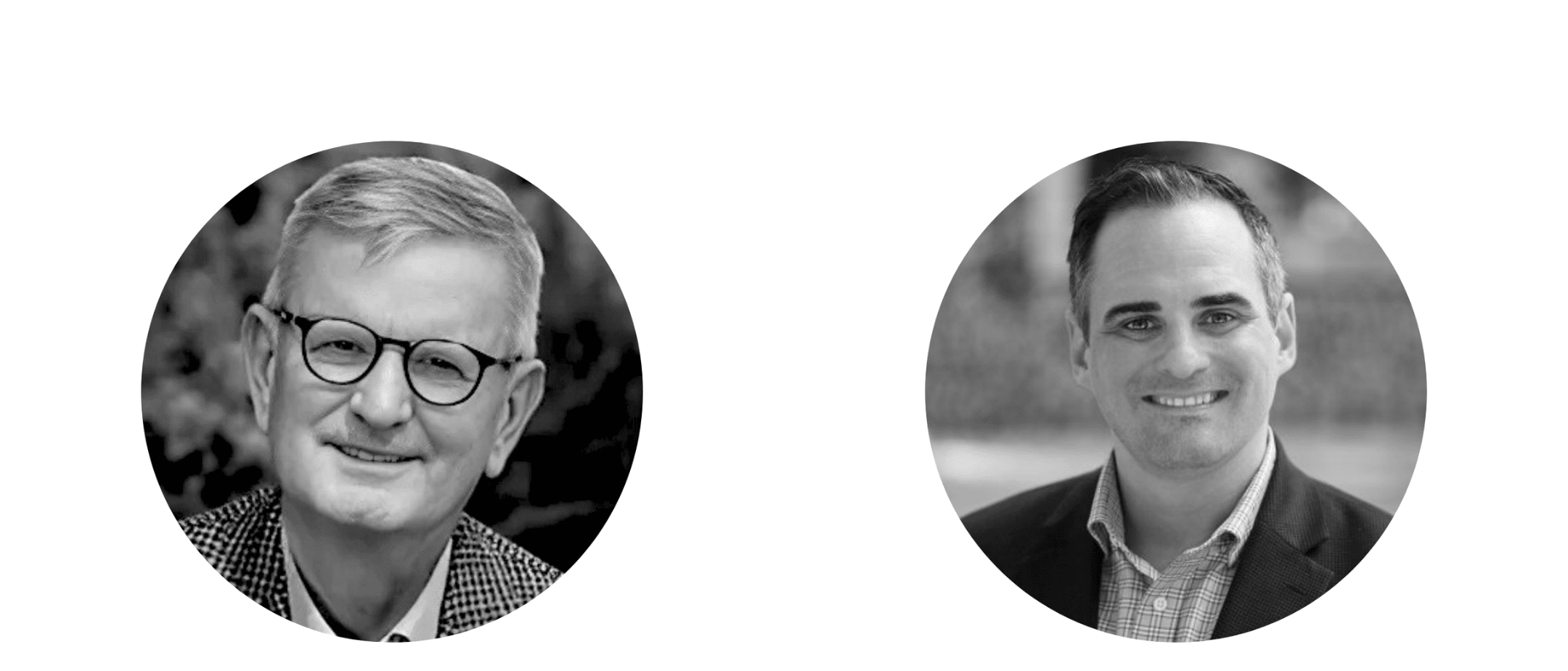
Panelists: Alan Fletcher and Austin Stewart are, respectively, the President/CEO and Vice President of Advancement for the Aspen Music Festival and School. Founded in 1949, the Aspen Music Festival and School is regarded as one of the top classical music festivals in the United States, noted both for its concert programming and its musical training of mostly young-adult music students. The eight-week summer season includes hundreds of classical music events: concerts by four orchestras, recitals, chamber music, operas, classes, lectures, and family programs. In the winter, the AMFS presents recitals and robust music education programs for local youth and families. The Aspen Music Festival and School’s mission is to be the preeminent summer institution of classical music education, performances, and presentations; to be transformational and inspirational for all involved; to be innovative and a catalyst for change in the world of music, while drawing on and respecting its great traditions. economics.
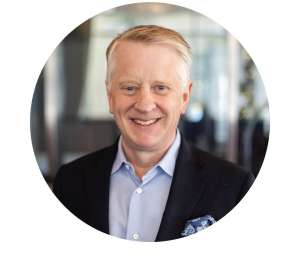 Moderator: Ron Schiller is a Founding Partner and Managing Director at Aspen Leadership Group and is an internationally recognized advisor to presidents, boards, and other nonprofit leaders. His 30-year fundraising career began at Cornell University during their groundbreaking $1.25B campaign. He served as President of the NPR Foundation, Vice President for Alumni Relations and Development at the University of Chicago, and in various leadership roles at Carnegie Mellon University, Northeastern University, New England Conservatory of Music, and Eastman School of Music. Since 2011, he has focused on executive search and talent consulting. He is an AIRS Certified Diversity and Inclusion Recruiter (CDR) and has written four books.
An Introduction from Ron Schiller:
In our Future of Philanthropy series, we’ve talked about a lot of issues, but one theme that’s run through the entire program has been the increasing strategic importance of philanthropy and the higher profile of the fundraising executive in the organization as a result.
Clearly, this CEO-CDO partnership is of great importance. The choice of CDO partner is one of the most important that a CEO will make, and CDOs depend on strong CEO partners to succeed in their roles.
These two roles have, in most cases, more relationships with more stakeholders of an organization than any other staff members or administrators, and those stakeholders become more and more important to future financial strength and sustainability as funding models change, and as financial realities limit growth in just about every other revenue stream.
Today, we are joined by two outstanding CEO-CDO teams to discuss how this relationship is evolving and what new demands it will be pressed to meet to ensure the successful future of nonprofit institutions.
Ron: Thank you for taking the time to be with us today. Nick and Alan, as CEOs, let’s start with some thoughts about the CDO role and what you need as a chief executive from the person in that role—and maybe how that’s changed over the years. The CEO perspective is one that we in the advancement community don’t hear every day. So, I think it would be helpful to start there.
Nick: First, I would say that these roles can all be very different. At Columbia, I spent time with my chief development officer and with the CDO of the university, but not in the same way and to the same extent that I did at Berkeley, when I went there as the chancellor. The three people I spoke to most at Berkeley were the provost, the vice chancellor for administration and finance, to whom the CFO reported, and then the chief development officer. So that was the “cabinet within the cabinet,” which had more time on my calendar than any of my other direct reports.
So, let’s transition to the present. Coming to a smaller nonprofit, I was aware that we didn’t have the usual forms of revenue that universities have. That is to say, no state support, no tuition, and little direct research; mostly our funding sources were, in fact, quasi philanthropic. That is, contracts, grants, and funding from industry. In fact, we had no chief development officer when I arrived and had to undertake a search almost immediately, before I knew that much about the organization, and I used my older default expectations and understandings about what it meant to hire a chief development officer.
Happily, we found Robin, with whom I had worked very closely at Columbia. And when I hired Robin, it was with the expectation that the CDO would be one of two primary roles helping to set strategy and assist me in building up the Board of Governors, as well as work with traditional funders and expand our fundraising network to increase the level of unrestricted philanthropic support.
Ron: Alan, you’re also a president and CEO, but in a very different nonprofit sector—what are your thoughts on what you need from a chief advancement officer?
Alan: When I came to my CEO role, the development operation worked beautifully primarily as a community-building enterprise, taking great care over relationships but not needing much in the way of systems or data. As we entered a period of much more ambitious capital and endowment work, the requirements of the CDO became more complex. Relationships will always be paramount, but tracking, study, forecast, and analysis are now also a constant need.
Ron: Robin, as the CDO role has evolved, it has become much more involved in informing institutional strategy, not just around philanthropy, but also in actually setting the overall strategy. Can you talk about that a bit?
Robin: Here at NYAS, Nick has turned it into a team effort, making some very important staff changes so that we can all work as a team to discuss strategies, agree on them, and drive them forward together. Nick and I used to work on them with just a few other people and had some success early on, one of which was the Leon Levy fellowships. Now we’re working together on building new initiatives, including fellowships and other types of programs where we can execute successfully. We work together on identifying prospective donors we can pitch to. It’s a team effort that also includes our chief scientific officer, as well as a new business development officer, whom Nick recruited.
Fundraising and strategy go hand in hand, managed by a team of people who are developing programs together that we can execute successfully, right, Nick?
Nick: Absolutely right. In my first couple of years here, we were able to launch three new programs, all of which came from individual contacts. The Leon Levy fellowship was Robin’s; the Tata Prize was mine; and the International Science Reserve was a team effort, but led by a new board member with whom we collaborated.
When we were able to work collaboratively that way, we began to realize that we succeeded most in raising money when we were developing programs for which we could secure support. And typically, those would be programs aligned with things we’ve done well in the past.
I had initially, and incorrectly, assumed that bringing high-net-worth individuals onto the board would inspire the kind of giving that you can get in universities, typically from alumni and people who have a very special investment in the institution. What happened instead was that I got some very high-net-worth individuals to join the board out of friendship with me, but they weren’t there to write big checks.
And so, we realized that almost all of our fundraising is going to be program-specific. It’s going to require domain expertise, and the heads of programs need to be integrally involved in all development efforts. That’s why I decided we needed to have a more distributed kind of development operation, which was also the case because we didn’t have the resources to keep a large development team in-house. So, as Robin said, the CFO now also leads business development, and the chief scientific officer is now largely a chief scientific fundraising officer. And our biggest and most important strategic efforts for the future will come from working on building out new programs that then get recurrent support.
Ron: Austin, how have you seen the advancement role evolve, and how instrumental is the CDO or CAO in helping to develop strategy and programming for the organization?
Austin: The advancement role has blossomed from a quiet back-office function into the organization’s strategic heartbeat. Where once it sufficed for the CAO to be a skilled fundraiser, today we must also be equal parts strategist, storyteller, and catalyst for innovation. Advancement now sits at the nexus of mission and momentum, weaving together data, relationships, and vision to shape not just how we raise funds, but why and for whom. Any CAO is responsible for co-creating strategy, translating organizational aspirations and programs in a way that inspires donors and builds a culture of philanthropy that benefits both an organization’s staff and its beneficiaries.
Ron: Nick and Alan, how much time would you say you devote to fundraising and fundraising strategy?
Nick: Well, this is a small outfit, and as I mentioned, we have a very distributed fundraising function that informs all program development. So, I probably spend 70% to 80% of my time on something related to fundraising. It could be having lunch with somebody who is a prospective board member, or a dinner in our Science Salon program, where we invite investors to meet over dinner with a major scientist. We have weekly meetings to review and strategize around pipeline opportunities and prospective opportunities. It’s a good chunk of my time.
Alan: Initially, our Board said, almost apologetically, that I might need to spend 50% of my time on fundraising or activities leading to it. I cheerfully replied that 75% would not be out of line. Now, including community and political relationships, I would say 75% remains about the right amount.
Ron: And how does that influence what you need from your chief development officer to make the most of the time commitment?
Alan: The CDO, and their team, need to know what conversations I’ve had and what conversations should be next. They provide the context through research and through our own records. They are always listening, in their own extensive contacts with our donor community and our staff across the organization, for important ideas and trends, and lining up useful connections. There’s a lot of drafting of talking points, and organization of agendas, minutes, prospectuses, proposals, and then there’s the follow-up and the tracking.
Nick: Over the last few years, for me, I’ve had to figure out how to enable Robin and her team to work effectively with team leaders in the rest of the organization. Increasingly, I have been pleased that Robin and our CBO have been able to work with our team leaders and command their interest in balancing their budgets, setting staffing parameters, and helping them think about development opportunities on the business side.
 Ron: So, you need your CDO to be someone who can be seen as a thought partner by those team leaders.
Nick: Yes, a thought leader with me, but also a thought leader with them.
Ron: Alan, does that resonate with you—the need for a CDO or CAO to be a thought partner?
Alan: To be a thought partner and an initiator of new ideas, with me and for me, is certainly crucial, and to be a creative member of the senior team also. Creativity, innovation, and openness are key qualities for being literally in the service of advancement.
Ron: Austin, what do you need from your CEO in order to be successful in your role and deliver on the philanthropic goals of the organization?
Austin: To achieve the philanthropic goals needed for an organization to advance, I rely on my CEO to be engaged and communicative, and to share a clear strategic vision and cultivate a collaborative environment among their entire leadership team. Success for me as a CAO is rooted in being treated as a trusted partner and advisor, with my input actively welcomed in shaping organizational direction and launching new initiatives, knowing where I can best help the organization partner with donors to actualize a shared vision.
But above all—and, I think, not just for a head of philanthropy but for their whole cabinet—it is essential that the CEO provides clarity on priorities, sets transparent expectations, and ensures I have the necessary context, resources, and authority to act effectively. When empowered as a creative, integral member of the senior team, an effective partnership with my CEO enables me, as their CAO, to be more nimble, strategic, and ultimately, impactful.
Ron: Let’s touch on the topic of boards, because boards have always been important to fundraising. But with the increasing reliance on larger gifts and the need to network your way to those larger donors, the right board is now essential. Should the CDO help with recruiting and managing Board members in partnership with the CEO? Because that’s a role CDOs never played before.
Robin: I would say that, yes, Nick and I have discussed the board makeup and have discussed certain candidates to a great degree, and I have often made suggestions for new members as well as those who may need to step off the board. But ultimately, it’s his decision.
Nick: From my point of view, attitudes and behaviors around board service have shifted quite a bit in the past few years. First-time activist shareholders have become activist Board members, and in some circumstances, donors who are on the board are no longer observing the kinds of norms that used to exist in terms of the limitations on their governance role.
So, the advice I would give is that, while one is looking for Board members who are potentially passionate about the mission, you want to make sure they also understand the limits of what good Boards should do as well. Our board has respect for the position of the CEO, but I have to actively maintain their separate roles and responsibilities.
Today, one has to be much more explicit about that at the outset in recruiting new Board members than may have been needed before. Because, as we’ve seen in so many other aspects of our contemporary life, norms and protocols no longer mean the same thing they used to.
Alan: Absolutely, the CDO should be involved in nominating—being extra eyes and ears in the search process, a powerful social resource in developing a mutual knowledge between the organization and the candidate, and in being clear about expectations and practices. We, too, see changes spurred by activist donors. It’s natural in an arts and culture organization that the creatives think they are the true organization. But the dedicated staff think they are really the backbone of the enterprise. And then, the board, the people who make it all possible, believe it is theirs.
The CEO and CDO together see this useful tension in the clearest way and can best mediate it. In terms of stewardship, the CDO’s use of time in explaining actions and results, tracking funds and endowments, understanding investments, and seeing ahead strategically are all invaluable. The more confident points of contact with a trustee, the better.
Austin: I would only add that the most effective Boards are those where the CAO is not just a recruiter or steward, but an active bridge between trustees and the organization’s mission. In today’s environment, it’s essential that we cultivate Board members who are not only generous but deeply engaged individuals who understand their evolving governance role and are committed to advancing our shared goals.
Stewardship now means ongoing, transparent communication about the impact of their support, as well as proactively connecting them to the organization’s work and beneficiaries. By fostering these authentic relationships, we not only secure vital resources but also build a Board culture rooted in trust, accountability, and a shared purpose to be together in leaving a place (or mission, or community of beneficiaries) better than we found it.
Ron: Quickly, before we end, I’m curious about whether you’re seeing the same trend that others in this profession are seeing in terms of a narrowing pyramid and having to rely on larger gifts from fewer donors? Also, given how many other spending priorities you have, how do you measure return on investment for philanthropy?
Alan: Our data shows a clear trend of fewer donors making larger gifts. It’s great that our donor group is getting stronger in their commitment to us, but it’s a much greater risk, as there are so many reasons why a donor might go away. As a very particular thing about Aspen, the pandemic almost doubled the number of billionaires with a presence here, and most of the new ones don’t yet understand our importance in the community, so all of us working for advancement have a big job—exciting and rewarding, but constantly challenging!
Ron: As you know, the terrain is shifting around DEI. As you think about diversifying your donor base, creating new streams of revenue, new programs, whatever it might be. How do you think about your work in equity, inclusion, and diversity?
Nick: We continue, in many of our programs, to be very attentive to issues around diversity in the broadest of senses. We’ve published and sponsored research that has been aligned with our mission and values—making clear that we think, and many of our partners think, science has done better when it’s done by a diverse group of scientists, and we need to recruit an ever-more-diverse pipeline of younger scientists. Much of our work in the New York City schools is with Title I schools, and we see that as contributing to science, although it’s also, of course, addressing the inequity in funding between the magnet publics, the elite privates on the one side, and the Title I schools on the other.
Ron: And do you feel you have the support of your board and donor base to continue that without interruption?
Nick: Absolutely.
Ron: In closing, if you think about the next several decades, compared to the past several decades, what does the CEO/CDO relationship of the future look like? What will define a successful CEO/CDO partnership?
Nick: We’re all trying to evaluate and better understand the current environment. There have been such dramatic changes in the institutions where we work, particularly around fundraising. We know that fundraising is ever-more important. We also know that fundraising has become more political than ever. And we don’t know yet how this is all going to shake out in terms of our fundraising future.
So, I think anybody who’s now a CEO or CDO is going to have to really take on board, you know, what is changing, not only in their relationship, but in the way in which they formulate strategy for different kinds of support. And ultimately, the survival of so many nonprofits is going to depend on successful conclusions to those deliberations, figuring out ways in which one can really find the kind of support one needs at the level one needs it, but also with the understanding of the limits of what philanthropy can secure for the organization.
Alan: A hallmark of a successful CEO-CDO partnership has always been to have as little daylight as possible between them. Not coincidentally, this has also defined the CEO-Board chair relationship! This, I think, won’t change, even as everyone in all these roles adapts to a different philanthropic landscape. The landscape is changing due to political pressures, since big changes anywhere in the not-for-profit sector—higher education, medicine, social welfare, international aid—inevitably affect everyone else, but the way the CEO-CDO relationship works might not be the place where change is needed.
Ron: Thank you all for sharing your time and wisdom with me and with Aspen Leadership Group’s readers. As we’re engaged in this exciting yet never-ending work, all too rarely do we get this kind of opportunity to step back and reflect on how these roles have evolved, as fundraising has become more and more important to the fulfillment of mission. Thank you again for taking the time to share your thoughts, and all best wishes for continued success in your fundraising efforts!
NEXT UP on August 26: Technology! Don Hasseltine moderates an important panel on technology as it applies to nonprofit fundraising. Any discussion of the Future of Philanthropy would not be complete without talking through the enormous implications of technology as both a disruptor and enabler. We gathered three experts to discuss the impacts of technology on nonprofit fundraising, across all the many dimensions of donor relationship building, as well as its impact on team culture, costs, and resources. It’s one you won’t want to miss.
Our newsletter subscribers receive additional content each month, in the form of job postings, industry insights, and firm news. To sign up, fill out the form at the bottom of this page.