

For the next two weeks, we are putting a special focus on the future opportunities and challenges of smaller nonprofits. While larger nonprofits often get more attention, 98% of nonprofits run on budgets of less than $10 million per year, according to the National Council of Nonprofits. All the forces reshaping philanthropy that we’ve discussed in this series still apply, but to be successful, smaller nonprofits may need to adopt different strategies and leverage unique strengths compared to larger organizations.
Our panelists come from three smaller nonprofits: the Latin American Educational Foundation (~$2 million annual budget), Book Trust (~$4 million), and the Reporters Committee for Freedom of the Press (~$8 million). Because the conversation was so deep and meaningful, we elected to break it up into two parts, instead of leaving important information and insights on the cutting-room floor:
September 16th: In this first part of our conversation, the panelists give us an overview of what keeps them up at night as leaders at smaller nonprofits. They address the issues of growth strategy, revenue generation, technology, staffing and recruiting, and a surprising emphasis on the potential of individual giving for smaller organizations.
September 23rd: In the second part of our conversation, our panelists take on the all-important subjects of working with Boards, how they’re keeping a growth focus despite strains on resources, how program development dovetails with fundraising, and how being small can actually be a superpower in a nonprofit sector that is undergoing deep structural change.
We hope you’ll join us for both parts of the important and fascinating conversation.
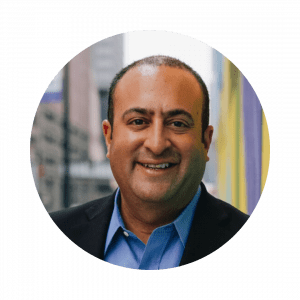 Panelist: Nick Lopez is President & CEO of the Latin American Educational Foundation, a nonprofit that provides scholarship support to Latino students in Colorado. As a first-generation college student, he believes deeply in advancing educational opportunities for all Colorado Latino students. Nick has over 20 years of national experience in philanthropy and non-profit leadership. He also has a background in higher education, having worked in various leadership roles at the University of Chicago, DePaul University, and the University of Denver. He earned his BA in Anthropology from the University of Chicago and MS in Public Service Management from DePaul University. Nick currently serves on the Board of Directors for the Colorado Nonprofit Association. In 2024, Nick was appointed by Governor Jared Polis to the America 250—Colorado 150 Commission, in partnership with History Colorado. He is also a proud and active alumnus of the National Hispanic Institute (NHI), a nationally recognized non-profit organization focused on engaging Latino high school youth in community leadership opportunities that advance our quality of life. In 2022, he was honored as the NHI Person of the Year.
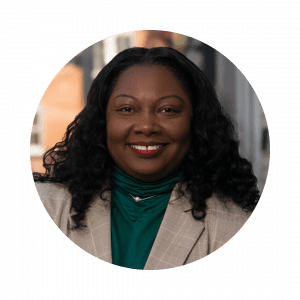 Panelist: Patience Peabody is the President and CEO of Book Trust, which provides students in Title I elementary schools the opportunity to choose and keep their own books—at no cost to their families—a program that is currently in schools in 11 states across the nation, serving over 40,000 students in more than 2,000 classrooms. Patience brings two decades of experience in nonprofits, philanthropy, and the public sector, most recently serving as the U.S. Executive Director at the Flamboyan Foundation. Her prior positions included Head of Communications and Community Engagement at the DC Office of the State Superintendent of Education, and VP of Communications + Creative at LIFT, a nonprofit that delivers one-on-one life coaching skills to parents in underserved communities. Patience also served as Associate Director of Development & Communications at the Campaign for Tobacco-Free Kids and Sr. Manager of Grant Programs at the DC-based nonprofit Share Our Strength. She holds a master’s degree from Georgetown University and a bachelor’s from Hampton University.
 Panelist: Michael Zwirn is Vice President of Development at the Reporters Committee for Freedom of the Press, where he is responsible for the organization’s donor outreach and fundraising. Michael brings a strong track record of communicating policy and program outcomes to donors and the public, and expertise in fundraising operations, partnership development, and strategic communications. His nonprofit experience includes international development and wildlife and forest conservation, policy think tanks, and research institutions, along with policy advocacy in both a 501(c)(3) and 501(c)(4) context. Previously, he served as Director of Development at the Congressional Progressive Caucus Center, and before that, as the Land, Water, Nature Program Director at the nonprofit Resources for the Future. His foundation experience includes serving as Director of Foundation Relations at the Conservation Law Foundation, as well as at the Woodrow Wilson International Center for Scholars, and as Director of U.S. Operations at the Wildlife Alliance. Michael has a bachelor’s degree in International Relations from Carleton College and a master’s of law and diplomacy from the Fletcher School of Law and Diplomacy at Tufts University, where he focused on International Environment and Resource Policy and Southwest Asia and Islamic Civilization.
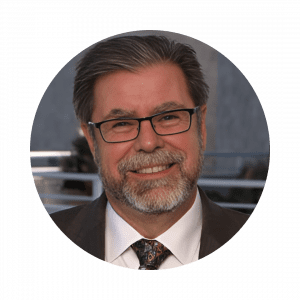 Moderator: Tim Child, Founding Senior Associate at Aspen Leadership Group, is a seasoned advancement executive who provides counsel to ALG clients in executive search and consulting. He has managed a diverse portfolio of executive searches and has placed and coached advancement leaders at prominent organizations in higher education, arts and cultural institutions, national nonprofits, foundations and institutes, and more. Before joining Aspen Leadership Group, Tim led alumni engagement, fundraising, and organizational development at multiple world-class organizations. He has presented regularly at conferences hosted by the Council for Advancement and Support of Education (CASE) and the Association of Private College and University Alumni Directors (PCUAD). He is a member of the Board of Advisors of the Goldin Institute. Most recently, Tim led the J. Paul Getty Trust in Los Angeles as Vice President of Institutional Advancement. For more than 20 years, he served in senior positions at the University of Chicago, where he also earned an MBA and a master’s degree. Tim holds a bachelor’s degree from St. Mary’s College (CA).
Tim: This is a big topic and we have a lot to cover, but let’s just warm up with an overview of how you—as leaders at smaller nonprofits—are thinking about the future. And more importantly, what are you doing to prepare your organizations for what will likely be a very different world for the nonprofit sector overall? Nick, you want to start us off?
Nick: Absolutely. In 2024, the Latin American Educational Foundation (LAEF) celebrated 75 years of serving Colorado students and scholars. So, this is an important moment for an organization that is well aware of our generational impact, and a moment where we realized we needed to look into the future. We need to be willing to evolve and reimagine ourselves.
In many ways, it was also an important moment to pause and to listen to our scholars, alumni, higher-ed partners, and industry partners, to get a sense of the context of Colorado today. The future economic and social prosperity of the state is inextricably linked to the success of the Latino community. By 2050, 35% of the state’s population will be Latino. The K-12 population is already at 35%, and in the city of Denver, it’s nearing 50%. That’s the future workforce, future post-secondary students, and the future customer base of local businesses.
So, as an organization, how do we adapt and evolve to look at that new reality for our organization? It starts with our mission, vision, and values—and revisiting those. We developed a three-year strategic plan that we’re at the halfway point to right now, and really one of the key pieces of that was: How do we realign our fundraising and community engagement to develop sustainably? Not just building capacity on the operational and administrative side, but move into some new spaces and provide new thought leadership that’s more reflective of the current context of the community.
We have clarity of the direction we’re going, and our communities have really rallied behind us. So that’s how we’re thinking about the future, not only in terms of how do we serve more scholars with more resources, but how do we anticipate and meet the different needs they’re going to have tomorrow.
Tim: That strategic piece will likely feel familiar to a lot of readers who may be leaders at smaller organizations. Patience, what’s happening at Book Trust?
Patience: So much of what Nick said resonates with me. I’ve been at Book Trust for a little over a year and a half, and the organization is celebrating 25 years in January. We’re at about $4 million revenue footprint right now, a level we hit during the pandemic, and I was brought in to be the organization’s growth-era CEO.
To put our work in context, there is a sobering statistic that if a child cannot read by the end of third grade, they’re four times more likely not to graduate from high school. There’s also a lot of data around what makes kids persevere and grow in their academic achievement, and so much of that is about how they learn and how motivating and joyful those experiences are. As an organization, we’re stepping into what we’ve always known to be true, that sparking a joyful reading experience is a means to build lifelong learners and motivated readers.
Coming out of the pandemic, for a number of reasons, the organization was flush with funds and trying to grow following a lengthy strategic plan that was created pre-pandemic. So, when I was hired, I was brought on to think about the future of the organization, who we are, what our identity is, and how we achieve sustainability.
We just launched a strategic plan called VISION2040, it’s a three-year strategic plan anchored in a 15-year vision for where we want to take the organization in the future—a vision for the impact priorities anchoring our programming, which acts as our North Star. Also baked into the strategic plan are anchors around sustainable funding and sustainable revenue, and what those look like. For example, one of our priorities is growing our individual donor base, where we have seen some attrition and churn, and so we’re trying to rebuild those relationships.
There is a lot of work to do, not just to get us on a growth path, but on the right growth path in terms of both impact and fundraising.
Tim: Michael, your organization is also growing. What does that path look like, and where is it taking the organization?
Michael: As a nationwide legal services organization, we defend journalists and newsrooms and provide free legal services for journalists, in defense of the First Amendment and in pursuit of public access to information and accountability and transparency. We are about an $8.5 million group now, and not only have we expanded substantially in the last couple of years, but we are also on track for continued expansion, partly because of the urgency of the policy climate.
As for revenue, right now we are heavily foundation-driven, with large grants funding the bulk of our operations. In addition to national philanthropy, that includes state-level foundations that fund local legal programming, where we have attorneys on the ground in different states to provide legal services. We have a lot of donor relationships that are being built out, both in states where we currently operate, as well as states where we’re going to be expanding. So, that involves a lot more relationship management for an organization of our size.
But like Patience, my other priority going forward is to build out individual giving. We’ve never had a large individual giving program because we’ve never had the personnel or the bandwidth to manage and steward our individual donors. As a result, we never really prospected in a systematic way for potential larger donors, even those that we could interact with if they were here in Washington, DC.
So, my priorities are building donor relationships in the states where we’re building out our local legal services, building an individual donor program to capitalize on the need for unrestricted giving, and honestly, managing the burden associated with foundation grants—which are substantial.
Tim: Nick and Patience, how are you thinking about where revenue will come from in the future?
Nick: Like a lot of nonprofits of our size, over the years, we became too reliant on events for our fundraising, and we lost some momentum with individual donors. As recently as 2022, just under two-thirds of our annual philanthropic revenue was coming through events, including a large gala and a golf tournament. As any small nonprofit knows, it takes an immense amount of time to organize and execute quality events.
We were losing time that we otherwise could have spent with our scholars, and especially our alumni, who are our bridge to the future. They represent our best opportunity for future major donors, as well as the best opportunity for networking and connectivity for our scholars as they make that leap from school to career. And above all else, they’re the best reflection of our mission.
But we have now realigned everything, growing overall revenue while reducing our dependence on events, which were just 18% of revenue last year—partly achieved by working with corporate event sponsors to convert that money into direct funding. We’ve focused on larger institutional support, like family and private foundations, as well as multi-year support, where we now have tranches of funding spread out over the next five years to give us a little breathing room.
Realigning giving, especially individual giving, takes time and intentionality. And something that was really important to me from a leadership and values standpoint is that as an organization, we’re going to be relational, not transactional, in how we engage with donors and especially our alumni. As for results, last year, including an estate gift, we brought in $625,000 in individual giving. And over the next few years, we’d like to get to the point that individual giving makes up 40% to 50% of all our fundraising.
Tim: If I could jump in here, it’s interesting that you’ve all highlighted the need for more individual giving. In a time when the pyramid is narrowing and a lot of nonprofits are narrowing their focus to small groups of larger donors, the board’s focus on individual donations seems to go against the grain.
Talk a bit about that. What’s your thinking on the push to focus on the top of the pyramid versus smaller donors?
Nick: Where we’re focused right now, as we look toward the future, is on our long-term, sustained donors—our active donors. Folks who have been giving to us year in and year out. What I’ve learned in my experience, especially in tougher times as you’re preparing for the future, is that it’s a much lighter lift when you focus on stewardship and cultivation of the people who’ve been there with you, those who have been giving to you consistently.
I think there are better opportunities to grow an annual donor into a major donor, for example, if they’ve been with you for some time. Rather than trying to go out and attract that new donor who’s never given before, which we’re doing as a cornerstone of building that longer-term funnel, we’ve really refocused the people we already know—roughly 1,500 or so active donors in our case—and that’s everything from monthly recurring donors giving $5 or $10 a month, to some of our larger institutional partners who fund us at the six-figure level on an annual basis, and everything in between.
Patience: I’ve said, since the moment I joined this organization, that the world is our oyster when it comes to grassroots and individual giving. In a sense, we’re ready-made for it. We just haven’t yet fully tapped into it. But it’s a key part of our three-year strategic plan, because one of the things we’ve been trying to do is reduce our reliance on restricted gifts. The future is going to demand greater adaptability and flexibility than restricted gifts might allow, and we’ve been able to grow unrestricted revenue in the last year, and that’s a big deal for us.
We’re technically a national organization in that we operate in anywhere between 11 to 15 states in any given year, but that work happens locally. So, we’re trying to strike a balance between our national presence and place-based galvanization of donors, even though we don’t have staff in every place where we work. How do we do that?
One of the things that we have done historically is convene regional volunteer advisory boards that focus on fundraising locally. And when I think about how we’ve been able to grow geographically, in terms of general operating dollars, a lot of it comes from those individual small-dollar donors who are not restricting their funds. We’ve been looking at data and user behavior and what’s attractive to them, what resonates with them about what we’re communicating, and it’s less about place-based giving and more about things that impact the human condition.
So, one of the things we’re building on over the next three years is this notion of grassroots. Because there’s something compelling in our particular mission, which we’re able to make very tangible in that we can tell donors how much it costs to supply books to one kid for one year—it’s ready-made for high volumes of small-dollar donors over time. For example, we partner with Scholastic, which does our distribution to schools, which gives us valuable access to lots of authors. So, we’re thinking about author engagement, which is a prime engagement strategy for more grassroots-level funding.
Tim: Michael, you said that individual giving is a new focus for your organization. Can you say more about that? Because I think that will be interesting to a lot of nonprofits like yours that have been heavily reliant on foundation funding.
Michael: We’ve never been heavily focused on building a large pool of small and medium donors, until now. For most of our 50-year history, we were focused on philanthropy from media companies, law firms, foundations, and larger individual donations. We never really built that larger pool of individual donors, and I think that that’s going to be an interesting challenge.
First, it raises the question of how we fundraise when we’re a medium-sized national organization working coast to coast, but without a significant local presence in any one market. A nonprofit of our size that’s regional or local has more opportunities to engage with donors and prospects in those communities because they’re just closer to them.
We get donations coming from every state in the country, but we’re not actually in those places and build on those relationships. So, one thing I think is important is that we’re trying to build our pipeline by increasing the sheer number of people who are giving, even if it’s at small levels, from which we can then prospect and hopefully cultivate larger individual gifts. It’s a strategy similar to what Nick and Patience have talked about—broadening the pool as much as possible and then prospecting within that.
Second, most of the people in our networks are in law, media, or other “elite” spaces. But there are potentially millions of people out there who are concerned about the First Amendment, the health of our democratic institutions, and the role of journalism in a democracy, many of whom would give $10 or $50 or $100 a year. They’ve just never come across us. We’re below the radar for a lot of grassroots donors who might like to become individual contributors. So, we really have to work on building that pool of individual giving.

Tim: I want to get to staffing, recruiting, and retention questions in a minute, but I want to follow up here with a quick question about resources. Individual giving can be a very resource-heavy undertaking. How do you see the role of technology in scaling up that element of your fundraising effort?
Patience: I think technology is going to be really important in making these kinds of programs manageable for a small team. For example, we’ve implemented a crowdsourcing software that has integration with our CRM system, and that CRM system is also relatively new. We do all of our program fee work through it; it’s integrated with our finance systems; and we do all of our customer service to schools through it. So, the CRM system is very well integrated across the entire organization.
For fundraising specifically, we are currently in a data quality assurance phase as we integrate our online donor system with the CRM, and we’re starting to do pipeline management through it. And my team only proceeds to the next step when we really anchor each piece as we go along.
We are also leveraging some AI tools to help support things like prospect network analysis, creating briefing books on prospects, and then using that material as a base to which our development team adds their own analysis and strategy. And then the last piece is an investment in an online donation system.
Michael: We do have a centralized CRM system, and I see some tech tools as being extremely powerful, particularly those in email marketing and communications, wealth engine screening, and other prospecting tools.
But my gut reaction to the question, overall, is that technology tools are fantastic only if you have the personnel and capacity to leverage the information that these new technologies can give you.
I’ve been in many organizations that made substantial investments—in terms of personnel, dollars, and time—in data systems that were intended to improve productivity and efficiencies within the fundraising operation. Once the purchase was made and the rollout completed, however, there weren’t enough people with the skills to adequately capitalize on what we were digging up, whether that was information on donor networks or powerful email marketing tools. There wasn’t the skill set or bandwidth to use it to its full capacity.
So, the data tools and technology are only useful insofar as you have people who can take what the data gives you and leverage it. I think it’s one of the challenges for smaller organizations.
Nick: We’re doing our best to anticipate future needs and make great technology investments that can hopefully help us persevere through what we see as an impending era of change for all nonprofits. The first thing I did was transition us to a new donor CRM to better organize, track, and measure our donor data. We didn’t have a really good sense of who was giving to us, how they were giving to us, and, more importantly, when they were giving to us. So, once we were able to do a good data migration, cleanup, and scrubbing, that gave us clarity on who we should be focusing on.
The other piece is capacity building, and we’re very grateful for a recent $150,000 donation from a family foundation to invest in technology capacity, not only the infrastructure side, but also outward-facing programs, like how do we start better utilizing generative AI in our marketing, communications, and donor engagement; in many ways, that may help give us the equivalent of a part-time employee in terms of better and more effectively communicating with our donors and telling our story.
That’s something I think we’re going to keep investing in, and we’re getting a significant amount of input from the Colorado Nonprofit Association membership across the state around AI and how to better utilize it. I think those organizations that are thinking critically about it and making some investments in it may have an advantage in the coming years.
Tim: Michael, I want to come back to you because you mentioned staffing and making sure you have the resources to use technology effectively.
In the Future of Philanthropy series, we talked quite a bit about the recruiting and retention challenges of nonprofits, and those challenges can be even harder for organizations with smaller budgets. How is the Reporters Committee thinking about recruiting and retention, and how are you preparing for the challenges ahead?
Michael: Just for purposes of clarifying the scale, we have a pretty small development team. I oversee development and data, and I have basically a team of four, other than myself. Two people are predominantly in development; one person is in development data; and the other person manages data, but is not so much focused on the development side. We’re a pretty small shop given the size of our annual revenues, and we’ve only managed to remain a small shop because we have some substantial foundation donors who have given mostly unrestricted funds.
Recruitment in my department is heavily focused on mission alignment and values. I’m looking for people who understand and value the organization’s mission and really resonate with that so they can effectively communicate it with our external audiences, including donors. And furthermore, we’re looking for people who want to maintain a good work-life balance. We offer a good, flexible working environment, which I think is attractive to a lot of people. We’re in DC, but we have national staff, and we have folks who are full-time remote.
But one of the challenges, and one of the reasons I’m focusing on our own recruitment and retention, is that we haven’t had enough bandwidth to adequately maintain relationships with individual donors while also prospecting and identifying those who have greater capacity. So, my most recent hire was a person who came out of public broadcasting, where annual giving and individual donors are sort of first and foremost. She’s building out our regular cycle of annual appeals and outreach to individual donors, and getting more rigorous about how we engage with individual donors, because so much of our emphasis was on the organizational and institutional donor side.
Focusing on staff collegiality and sense of shared mission has been one of my priorities as we are building a post-pandemic team. We’re building up a DC-based staff, but at the same time, we’re also national. So, we also have to maintain our good relationships with those staff who are remote, and that’s been something that many organizations have needed to learn in the post-pandemic environment.
Tim: And on compensation, how do you see the challenge for smaller organizations?
Michael: Well, we have full-time folks in the office and others who are a mix, and most of us are a mix, and I think that flexibility is very attractive to a lot of people. I also think that for recruitment and retention, non-cash benefits may be viewed as more significant than the salary itself, because people are attuned to things like their health coverage, and opportunities for training and for professional development, and mission and values, most of which aren’t necessarily calculable to an individual number. Those things do make the organization more attractive than some places that might pay a higher annual salary.
Tim: Patience, what does recruiting and retention look like at Book Trust, and when you think about the future, what does the plan look like?
Patience: We are also focused on mission alignment, as well as culture. We’ve found that our work at Book Trust is very resonant with moms who are reentering the workforce or those looking for more flexibility. Every time we put out a job posting, we average about 250 applicants a day. But the culture piece is also extremely important.
For my development staff, you are more than just the bottom-line number you bring in—even though I’m very upfront that fundraising is a numbers game, and we’re here to fundraise. We do a lot of mentorship and coaching. Because fundraising can be a really tough job, it’s important that we place an emphasis on restoration, self-care, and being connected.
As to the future, I think that a quintessential challenge for small organizations is needing a scalpel and only being able to afford a blunt instrument. When you’re a smaller shop, you need folks to be able to do a little bit of everything. But your strategy calls for a particular area of expertise that can be expensive. How do you balance that?
That’s something we’re constantly grappling with, and my answer is that, for a $4 million organization, we’re designing for growth. Right now, we have a three-person development team, plus a more-than-half-time grant writer. And we believe that investment is well worth it.
Some organizations our size maybe have one fundraiser and maybe a part-time outsourced staff member. But when I designed the VP role, I needed someone with enough career experience to have seen and done a lot. I needed someone pretty well-versed in individual giving, who can manage grant writing, who has done events, who can be comfortable with data, and who has an entrepreneurial mindset. You know, a unicorn, and we were lucky enough to find one.
The last piece, which I most recently added to the team, was an operations generalist who also had some basic fundraising background. Right now, she manages our CRM database, provides prospecting and meeting support, and is starting to dabble in email campaign work. The idea is that, as we become more sophisticated, she can grow into managing our grassroots campaign work.
In being future-focused, we look for people with an aspiration to learn and grow, and as we build out over time, we’re developing folks for their next thing.
Tim: Very quickly, as CEO, you also have fundraising responsibility. How much time do you spend on fundraising, and how do you see that evolving in the future?
Patience: It’s about 40% right now, but that’s going to increase significantly because I’m rolling out a new strategic plan, which I’m very excited about. A big part of my time will be spent building up a culture of philanthropy internally and with the Board. And when I think about a fundraising culture, the way I design it is around external relations and visibility.
We’re very much focused on amplification of the organization’s work, being in discussions like this one, because it’s an opportunity to get in front of many more folks with the mission and story of Book Trust. So, my job is to bring folks into the fold.
We made investments in our fundraising team so that I can balance donor meetings with having breathing room to think about fundraising in a very specific way, which is to use visibility in the service of pipeline building and bringing people into the fold.
Tim: Nick, what does the recruiting, retention, and compensation picture look like at LAEF?
Nick: One of the first hires I made was a fractional CFO. The Board asked me what resources I needed to be successful, and I said, “A good accountant, because you don’t want me doing ledger entries into QuickBooks.” Our accounting partner, who works on a contract basis, came in and provided a lot of financial clarity, partnered with me on audits, and helped restructure a lot of our finances to have a better sense of cash flow—understanding who’s giving, how, and when. That was a really important step.
As for a full-time professional team, we hadn’t had a director of development in about 10 years. So, we needed a full-time dedicated professional to focus on day-to-day fundraising, developing a pipeline of annual donors, cultivating major donors, and working with industry and corporate partners. As CEO, I remain focused on larger institutional opportunities, working with some of our more significant major donors, past board members, legacy giving, etc. But we really needed to professionalize our fundraising and our financial and accounting pieces.
Like Michael, I’ve also made big investments in our team in terms of our benefits strategy; for example, we now offer a 401(k) match. And we work to create opportunities for growth even beyond LAEF. We’re a great bridge, given our 75-year legacy, into larger community leadership opportunities and engagement, and so that’s just capitalizing on something inherent to who we are in our nature. Our board is fully supportive of investing in our people. Because without our people, we don’t have a mission. Period.
Tim: Do you have a donor portfolio yourself?
Nick: I do. In an organization of this size, I enjoy being on the front lines. My director of development and I do a lot of joint visits, and everyone in our organization has some touch point or responsibility for marshaling resources for the organization.
Even our director of scholarships and services. She’s not out soliciting, per se, but she does have responsibility for the revenue related to some specific funding opportunities. I love being a player-coach, and I think the best way to energize the work is to get in the foxhole with your team and do it.
TO BE CONTINUED…
NEXT WEEK on September 23: Our panel of leaders at smaller nonprofits takes on the issues of board management, potential synergies between programming and fundraising, overcoming challenges to growth, and they offer powerful concluding thoughts on why—in a time of fast-paced change—being small may actually be a superpower.
Our newsletter subscribers receive additional content each month, in the form of job postings, industry insights, and firm news. To sign up, fill out the form at the bottom of this page.