

Welcome to Part II of our focus on smaller nonprofits. Last week, we covered a range of topics, from growth strategy, to recruiting and staffing, to revenue generation and individual giving, to technology as a force multiplier for smaller nonprofits.
This week, our panelists take on the all-important subjects of working with Boards, how they’re keeping a growth focus despite strains on resources, how program development dovetails with fundraising, and how being small can actually be a superpower in a nonprofit sector that is undergoing deep structural change. They also address an emerging trend toward more collaboration and strategic partnerships as a way of achieving financial sustainability while also extending impact.
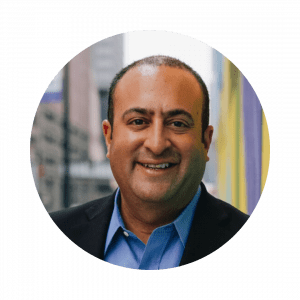 Panelist: Nick Lopez is President & CEO of the Latin American Educational Foundation, a nonprofit that provides scholarship support to Latino students in Colorado. As a first-generation college student, he believes deeply in advancing educational opportunities for all Colorado Latino students. Nick has over 20 years of national experience in philanthropy and non-profit leadership. He also has a background in higher education, having worked in various leadership roles at the University of Chicago, DePaul University, and the University of Denver. He earned his BA in Anthropology from the University of Chicago and MS in Public Service Management from DePaul University. Nick currently serves on the Board of Directors for the Colorado Nonprofit Association. In 2024, Nick was appointed by Governor Jared Polis to the America 250—Colorado 150 Commission, in partnership with History Colorado. He is also a proud and active alumnus of the National Hispanic Institute (NHI), a nationally recognized non-profit organization focused on engaging Latino high school youth in community leadership opportunities that advance our quality of life. In 2022, he was honored as the NHI Person of the Year.
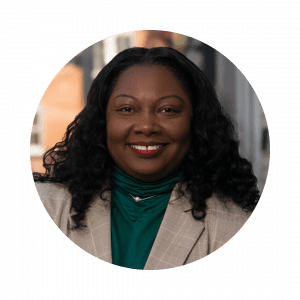 Panelist: Patience Peabody is the President and CEO of Book Trust, which provides students in Title I elementary schools the opportunity to choose and keep their own books—at no cost to their families—a program that is currently in schools in 11 states across the nation, serving over 40,000 students in more than 2,000 classrooms. Patience brings two decades of experience in nonprofits, philanthropy, and the public sector, most recently serving as the U.S. Executive Director at the Flamboyan Foundation. Her prior positions included Head of Communications and Community Engagement at the DC Office of the State Superintendent of Education, and VP of Communications + Creative at LIFT, a nonprofit that delivers one-on-one life coaching skills to parents in underserved communities. Patience also served as Associate Director of Development & Communications at the Campaign for Tobacco-Free Kids and Sr. Manager of Grant Programs at the DC-based nonprofit Share Our Strength. She holds a master’s degree from Georgetown University and a bachelor’s from Hampton University.
 Panelist: Michael Zwirn is Vice President of Development at the Reporters Committee for Freedom of the Press, where he is responsible for the organization’s donor outreach and fundraising. Michael brings a strong track record of communicating policy and program outcomes to donors and the public, and expertise in fundraising operations, partnership development, and strategic communications. His nonprofit experience includes international development and wildlife and forest conservation, policy think tanks, and research institutions, along with policy advocacy in both a 501(c)(3) and 501(c)(4) context. Previously, he served as Director of Development at the Congressional Progressive Caucus Center, and before that, as the Land, Water, Nature Program Director at the nonprofit Resources for the Future. His foundation experience includes serving as Director of Foundation Relations at the Conservation Law Foundation, as well as at the Woodrow Wilson International Center for Scholars, and as Director of U.S. Operations at the Wildlife Alliance. Michael has a bachelor’s degree in International Relations from Carleton College and a master’s of law and diplomacy from the Fletcher School of Law and Diplomacy at Tufts University, where he focused on International Environment and Resource Policy and Southwest Asia and Islamic Civilization.
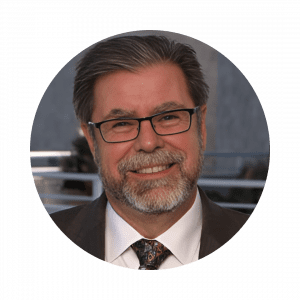 Moderator: Tim Child, Founding Senior Associate at Aspen Leadership Group, is a seasoned advancement executive who provides counsel to ALG clients in executive search and consulting. He has managed a diverse portfolio of executive searches and has placed and coached advancement leaders at prominent organizations in higher education, arts and cultural institutions, national nonprofits, foundations and institutes, and more. Before joining Aspen Leadership Group, Tim led alumni engagement, fundraising, and organizational development at multiple world-class organizations. He has presented regularly at conferences hosted by the Council for Advancement and Support of Education (CASE) and the Association of Private College and University Alumni Directors (PCUAD). He is a member of the Board of Advisors of the Goldin Institute. Most recently, Tim led the J. Paul Getty Trust in Los Angeles as Vice President of Institutional Advancement. For more than 20 years, he served in senior positions at the University of Chicago, where he also earned an MBA and a master’s degree. Tim holds a bachelor’s degree from St. Mary’s College (CA).
Tim: Okay, in the first part of our conversation, we talked a lot about the organization—from staffing and recruiting, to technology, to building growth and revenue strategies.
All of that raises the question of the role of the board. Managing the board can be tricky for smaller nonprofits. Are your boards behind you, supporting your work?
Patience, how does your board operate? Do you have a give/get? Are they getting behind your strategy?
Patience: First, let me clarify that ours is not a “working board,” but rather a Strategic Advisory Board, and we have done a lot of work to make sure those boundaries exist so we can maximize our collective contributions. I would also say that overall, they’re aligned with my vision, and as we’ve gotten more concrete and confident in that vision, they’ve focused on deeply pushing transformational ideas and affirming decisions—there have been tough ones—that serve to move the organization forward long-term.
Partly that’s due to the fact that, as I seek their wisdom, I also unwind some of the magical thinking that all boards can fall prey to. That is, “Why don’t you just go get a million-dollar corporate donor?” Many boards, especially at smaller organizations, often think in terms of a magic bullet that will solve everything. Reality is much more nuanced and complex. I’m lucky that I can have the type of candid, honest conversations that I do with my board.
As for giving, my expectation is that we’re at 100% board giving—a goal we met last year. It’s really important, particularly our foundation donors, to see board members giving and being involved, and my perspective is that we need to have individual conversations with each board member to talk about what that looks like for them.
Last year, we were also on a mission to ask our foundation donors and a number of individual donors to consider doubling their gift over one to three years. And we asked our board to lead that charge. Many of them did, and they had never been asked to step up in that way. The other part of the conversation is about enlarging our network, and we do an annual network mapping, both to support giving as well as our events—counting on Board members to connect us with local businesses is also a way they can share their strengths.
Tim: Nick, you’ve been doing a lot of work, actually rebuilding your board, which a lot of smaller nonprofits might need to do in order to make the kind of strategic shift you’ve made. How did that work out, and what did that look like?
Nick: I find myself telling my team from time to time that two of our key values have to be transparency and accountability. My team is accountable to me. I’m accountable to the board. And ultimately, the board and the team, all of us, we’re accountable to the community. And what our community was telling us was, it’s time to transform and do more. It’s time to think differently.
The board heard that, and they embraced it, because at the end of the day, we exist to serve the community. They had valid questions about how much of our resources—especially related to event revenue—were translating into impact in terms of scholarships. So, the board had to look inward in terms of how they, as a collective group of community, business, and higher ed leaders, would be willing to chart that new path. In many ways, our new direction is a generational shift, intentionally. Our scholars need to look at our organization and see themselves in it: whether that’s me, our team, our alumni who participate as volunteers, or our board. The board listened to the community and took that accountability seriously.
So, we’ve done some major board restructuring, and I like to say that we used to have a “working board,” but now we have a “strategic board.” Part of that included shrinking the board from seventeen members to nine. We focused on having the right nine people for this moment. We focused on bringing in alumni who also had professional expertise and the community connections we needed to activate our fundraising and our community engagement. Our board agreement outlines not just the typical give/get, but also expectations for how they will support the team and our strategic plan. That’s new, and it’s been successful. One of our largest institutional, multiyear commitments, of $225,000, was accelerated because of a board relationship.
In talking with friends and colleagues in the nonprofit community who are going through similar organizational changes, I think often times we overlook the importance of doing deep work with the board—making sure they’re in alignment with us. I’ve seen organizations where the executive director or the team can get ahead of the board sometimes, and it makes things uncomfortable to say the least, but revitalizing the board was a critical part of our work as we started thinking about the future.
Tim: It’s interesting how smaller nonprofits can have very different boards. As Patience said, she works with an Advisory Board, while Nick talked about rebuilding his board into a “strategic board.” Michael, tell us about what working with your board is like.
Michael: Sure. Our Steering Committee represents print and broadcast media, with only a small segment of the membership representing what you’d call traditional philanthropy sectors — corporate, foundation, family wealth, etc. As a result, the board is by nature cautious on expenditures, perhaps wanting to see us holding more in reserve because we don’t know what the fundraising picture is going to look like in future years.
At the same time, we have expanded our budget and programming substantially, since 2016 in general, and accelerating since 2020. In fact, in just the last few months, we’ve gotten the funding to expand our Local Legal Initiative from five states to nine—basically doubling the reach of our legal programming in the local work, while also expanding our national litigation work here in Washington. But that means we have to put attorneys on the ground in four new states, and support them with paralegals and communications and legal fellowships to back up their legal work in those respective states.
That’s a substantial expansion, and we’re also poised for some substantial national litigation work, for example, taking on the administration, the DOJ, and the Department of Homeland Security and their policies to defend journalists and First Amendment rights.
Now, there’s some tension about how quickly we can capitalize on the funding that we’ve had because it does take time to expand in a sustainable way—to recruit people and make sure they’re ready to deploy and have the organizational impacts that they’re being hired for. And our board is institutionally cautious because we don’t know what the political climate and fundraising are going to look like in ’26 and ’27 and ’28. Yet, at the same time, we currently have the resources to expand in a substantial way.
Tim: That answer is an almost perfect segue to something a lot of smaller organizations are challenged by, especially in this environment, and that’s growth. When so many smaller nonprofits are focused on survival, all of you have said that you’re focused on growth. And I want to dig into that a bit.
Smaller organizations are fortunate in the sense that programming and fundraising can work together on a growth strategy. But do you grow first and fundraise second? Do you look for available funds and then grow programs to match? Is it a parallel process?
Talk a bit about that dovetailing of programming and fundraising and what that looks like on the ground at the Reporters’ Committee…
Michael: That’s a great question. And I’ll start by saying that one of the things I’ve always enjoyed about working in smaller- and medium-sized organizations is that you can work much more closely among your program, development, and operations teams in identifying opportunities and leveraging program capacity to achieve impact.
That’s one of the things that I think has been really effective at the Reporters Committee over the last couple of years. As we’ve been expanding our Local Legal Initiative, I’ve been able to work really closely with our VP of Legal Programs and other senior leadership in identifying what regions and what jurisdictions are well-suited for expanding our legal services. Together, we’re able to complete the calculus of: What’s the media environment in that state? What’s the legal environment? And what’s the philanthropic environment?
Tim: And what’s been the outcome of that calculus?
Michael: We’re very blessed insofar as we’re operating this year with a substantial surplus. We can afford to pursue the needs we’ve identified, and we’re going to be hiring national litigators to work on federal litigation as well as expanding our state programs with some substantial new grants. So, we have focused on deploying our resources where we see the urgent needs and opportunities.
But to a certain extent, we’re also being opportunistic. It’s a bit like a Venn diagram where something opportunistic falls into our lap, and we can see the value for it programmatically. That would include expanding our Local Legal Initiative in some states where funders contacted us, in addition to hearing the needs from journalists and newsrooms.
We did a nationwide call for proposals a number of years ago, and we rank-ordered those opportunities according to a set of criteria that would justify having an attorney on the ground there. In some of those states, the fundraising climate is challenging. Places like Mississippi or Louisiana are hard places to raise money for legal support for journalists. But now that we have the grants, we’re going to put those attorneys on the ground.
So, we’re mostly pursuing needs and the opportunities we’ve identified as strategically important, but where it makes sense, we’re also following funding opportunities that are presented to us.
Tim: Nick, you’re also growing. As a nonprofit CEO, how do you see the synergy between programming and fundraising at an organization of your size and scope?
Nick: In our case, it works both ways. As a legacy organization in the community, with 75 years of history, people have seen long-term projects we’ve done, and we’re able to go proactively to some funders and say: We have an idea, this is why we think there’s alignment between what you’re trying to achieve and how we’re looking to expand our impact.
But there are also funders who come to us. For example, we had a major industry partner come to us with an idea for a program in the San Luis Valley of Colorado. They said that they believed we had the experience and community engagement to execute the program they had in mind, and explained what the funding could look like.
Another example would be in an area like aviation, where we’re being more proactive and talking to higher ed and industry partners about a need we know is out there, because we’re seeing the increasing demand among our applicants. There’s been huge industry growth in aviation here, as Denver has grown into a big airline hub. So, that’s us talking to them about how we can have better connectivity with them and be a community partner and thought leader in workforce and industry needs for Colorado.
But within that, we never lose sight of the mission to continue being an essential part of the future of Denver and Colorado, and exploring how we can contribute to that.
Tim: And how does that translate into growth goals for LAEF (Latin American Educational Foundation)?
Nick: Well, as recently as 2022, we were awarding anywhere from 75 to 90 scholarships a year, at a total of about $161,000. We’ve had good, steady, planned growth over the last few years to where this year we were very proud to award 144 scholarships totaling $401,000. On top of that, the impact of those scholarships was magnified by MOUs with universities and colleges in Colorado that match our scholarships dollar for dollar. So that turns into roughly $625,000 in total scholarship impact.
Our goal is by 2027 to have a baseline of $500,000 a year in scholarships we’re funding, and then with the match, getting us closer to $1 million in total funds. We’ve also focused on the size of our awards. We’re on a growth trajectory where, by 2027, students pursuing a four-year degree will receive $5,000 per year, for the full four years—that’s well above our historical average of $500 to $2,000 per student, per year.
This past year, we had 619 applicants and could only award 144 scholarships. So, the thing that keeps me up at night is, how do we get to those other four or five hundred kids?
Tim: Patience, what’s your view on the synergy between programming and fundraising, and what does growth look like at Book Trust, particularly as a smaller organization with a national presence?
Patience: At Book Trust, we design where we want our impact to be, and then we set out to fundraise. The way that I think about it is, there is our core work that’s happening and needs to be sustained, and there’s a little bit of R&D and piloting that is always happening to test whether we can successfully enter a market or add complementary programming. Sometimes it doesn’t pan out, and sometimes it does.
So, we do stay adaptable for opportunities within the scope of our mission, while also being very conscious of the danger of mission creep. We always stay bound to our center of gravity, which is spelled out in our strategic plan, that we’re an organization focused on early literacy. We’re not going to expand into radically different programming, no matter how much money might be available.
Yet, we also know that, in terms of operational sustainability and fundraising, we can’t just look at students as a silo. For example, when we talk about early literacy, we’re talking about families and what happens at home. They get their books in school, but they take them home—what happens at home? And so, there’s a family engagement component that has become a natural outgrowth of our early literacy work.
The other piece is that, with everything that’s happening in the world, we can’t not have a voice on advocacy and policy. And so, those kinds of additional programs are natural outgrowths of our core mission and are reflected in our strategic plan. But still, the center of gravity is early literacy and helping kids become strong, motivated, and engaged readers.
But I’d like to also point out something that I think is extremely important for smaller nonprofits looking to grow their impact, and that is the importance of collaboration. You hear all the time about competition for dollars, but it’s possible to translate that into a spirit of partnership with other organizations, to cooperate to win more funding dollars instead of competing for the same dollars.
In the literacy field, we all care about the same kids, and there are ways in which we can team up and go after funding. So, at Book Trust, we’re really thinking about collaboration, and there’s a lot of energy right now in our space around that. We’re teaming up with WestEd, a group out of California who’ve been doing some work for us. And I’d love to see more of that overall, among smaller nonprofits.

Nick: If I could echo that sentiment, I think that’s such an important point for smaller nonprofits. Over the coming years, there’s going to be a full realignment of the nonprofit sector nationally. And as funding shifts, smaller organizations are going to have to think much more—and more creatively—about coalitions, and how they can build stronger networks of support for their work.
Sadly, we know that some nonprofits are struggling and may not exist in two to three years, and so we’re doing our best to start creating the resources to support them. Holistically, our sector is pretty strong in Colorado. It’s well organized. Not only do we have the Colorado Nonprofit Association, that’s a convener and a facilitator and an activator. There are other great organizations that serve and support nonprofits in their local communities. And so, there’s this great tapestry of work that happens, and I think we’re a sophisticated state in that regard where our nonprofits work really well together. That is going to position us well as we come into these next two to three years, but across the entire sector of nonprofits nationally, we need to see much more of that.
Michael: In addition to programmatic collaboration on impact, there’s also the basic question of operational resources that are challenging for smaller nonprofits. You don’t have the efficiencies of scale in areas like human resources, IT, and finance to justify bringing that expertise and capacity in-house. We have to outsource some of those functions, even though we might be stronger if those things were managed internally.
So, I think there might actually be some reasons for nonprofits to consider sharing oversight of some of these operational pieces without going through the organizational chaos of a merger or acquisition.
That said, I do think that there are nonprofits that have merged and used that strategy to scale effectively and achieve greater impact. But since so many nonprofits are intensely associated with their founders or with original leadership, that can be a challenging path, where there’s a lot of organizational equity involved in maintaining independence and autonomy.
But the efficiencies of scale question is one of the things that we grapple with all the time in my organization, as I’m guessing a lot of smaller organizations do as well.
Patience: If I could make one last point on this issue of collaboration, it would be that it’s not necessarily a new concept. Sometimes I think we talk about it like it’s new. As a professional, I go back and forth between running nonprofits and directing grant-making at foundations. And I’m still very tapped into my foundation networks, and these are the conversations happening on the foundation side as well. They want to see more alignment of resources and collaboration on the nonprofit side—not necessarily M&A, but the collaboration piece. I think that’s the future.
Tim: I want to pick up on something Nick said about an impending structural change for the nonprofit space overall. Do you all agree that we’re in the midst of a permanent step-change to something new, for smaller nonprofits in particular? And as leaders, how do you think about the challenge of leading through that kind of change, which can be both thrilling but also intimidating and a bit nerve-racking?
Nick: That’s something we’re thinking about, and talking about, every day right now. And it gets back to the issue of collaboration. Leaders are going to need to shift from organizational independence to interdependence—prioritizing partnerships, alliances, and networks that strengthen the broader ecosystem, rather than just our own brand or our own specific initiatives.
Boards are going to need new governance models for shared services and partnerships, and be willing to take some risks, be uncomfortable, and go into space where there’s joint oversight of certain initiatives or programs, maybe joint funding, and ask, ‘How can we do some shared strategic planning?’ Funders are also going to play a really critical role in providing some funding, honestly, for mergers, for shared infrastructure, and alliance building.
I learned these lessons, especially in healthcare philanthropy, when I was executive director at the St. Joseph Hospital Foundation. We had eight different care sites, and even within the same system, we were applying for the same grants and competing with each other. So, we paused and took a centralized approach, and we said, we’ve got St. Joseph Hospital, St. Vincent, and St Mary’s; one’s in a rural environment, one’s in an urban environment, one’s in the suburbs. We said to funders, ‘Here’s how we want to fund this specific project to give you a much better data set and look into health care outcomes across different settings.’ And we started raising money like crazy.
These are the kinds of experiences that are informing how I think, and how a lot of nonprofit leaders think about the need to collaborate more and be more integrated. I think you still have independence, you still have your boards, you have your own fiduciary responsibilities, but that’s where I see it going, and it’s not going to reverse.
It’s not as if, if there’s a change in federal administration, that all of a sudden a switch gets flipped and we’re back in 2022 or 2023. This is a fundamentally new direction of the nonprofit sector. I’m preparing LAEF for it. Our association is trying to prepare the state for it, and we’re doing our best to work with funders and community partners so they understand and get behind the transition as well. Because our nonprofit sector is just critically important to the future of Colorado.
Patience: Without a doubt, the landscape is changing. And having been a grant maker—as I mentioned, I go back and forth—it influences how I think about leading our organization through change. Three things come to mind, which apply not only to Book Trust but also to organizations of any similar size and scope as Book Trust.
First, I can’t overemphasize the collaboration piece. I think we have to do more together. Independent of mergers and acquisitions, we have to collaborate in more ways, on more things. Second, what we’re designing right now are diversified strategies for earned income, in order to escape the whims of others. For example, foundations shift their priorities all the time. My family has a small, private family foundation, and I think about how we grapple with and settle on our priorities, and how those shift and change, and why they shift and change. So, I’m thinking about how Book Trust, as an organization, can safeguard our funding against funders’ shifting priorities.
A key way to do that is to build monetization strategies. Early in my career, I worked for an organization called Share Our Strength, which runs a campaign called No Kid Hungry. They created a consultancy to help organizations build earned income strategies by monetizing their expertise. For Book Trust, how do we tap into our vast networks to build something we can monetize? That’s a priority for us, but earned income is something that a lot of nonprofits do not think about. More of them should.
And then the third piece for us, because we operate in the publishing space, is to potentially create media of our own. There is so much opportunity in entertainment and media and publishing that we haven’t explored, and we’re starting to do some R&D around that.
As far as leading through change, when you’re at this stage where you’re priming for depth and growth, culture is critical. You need folks who are nimble, who are not territorial, who collaborate and proactively communicate, who understand the benefit of the whole versus the benefit of the individual. These are equity principles. These are inclusion principles.
As I built this team, I spent a lot of time talking about what equity and inclusion principles look like in practice—how we hold ourselves accountable for it, and how performance management supports it. So, it is woven through our organization, and it’s what anchors our culture. So that when we build, we build collaboratively.
Michael: I think, honestly, since the 2016 election, nothing’s really been the same. Between the election and then the pandemic, the operating environment for nonprofits is now extremely different.
I’ve worked predominantly at foundation-funded organizations and have seen the consolidation of wealth and the rise of the mega-donor. Many of these folks are not necessarily very receptive to your pitch or the significance of the issue you’re working on, because they think they know best. With the consolidation of wealth, that’s ever more prevalent, especially with money coming out of tech, which is often less driven by a philanthropic mindset and more by an engineering mindset. Then, of course, there’s the shrinking of government funding for many sectors. My organization is fortunate in that we’ve never depended on government grants.
I’m always pushing my colleagues to make the best case for the urgency of our work, even to audiences who’ve never invested in our space. One of the things that we tell people is that, if you’re concerned about gender and reproductive issues, or climate, or gun violence, then those are your first issues. But your second issue should be an informed population, and journalists keep our population informed about your issues so that society can respond with urgency.
So, we’re always trying to establish that larger sense of relevance and urgency. If you are only focused on legal services for journalists, then you’re the weirdo in the room. But if you’re talking about informed communities and participatory democracy, people understand the urgency. I think a lot of people have become disengaged and disenchanted, and you have to reach those people with whatever messages you can find that work.
Tim: I want to bring this conversation to a close on a positive note. Something to reach our community of smaller nonprofits with a positive message.
What has struck me throughout this discussion is how positive you all are, and how growth-focused your organizations are. At a time when things can feel a bit grim for smaller nonprofits, you even seem to feel that being smaller is a kind of superpower!
What are your closing thoughts on that, and on the future for organizations like yours that are smaller in size but big in heart and ambition?
Michael: I totally agree that small organizations can actually have many advantages over larger ones. One of the biggest advantages is an ability to pivot programmatically and organizationally. We can be nimbler than if we were larger and staff were structured in silos, where decision-making is more restrictive and it takes longer to come to a consensus.
For example, at the Reporters Committee, we’ve had to adjust on the fly to address immigration law. All of a sudden, journalists are worried about getting caught up in deportation raids. So, we had to become well-versed in immigration law and its impact on newsgathering and the First Amendment, which was entirely new for us. Six months ago, we were not working on this issue. Now, a lot of our queries from newsrooms are about immigration issues.
But that’s a unique strength of organizations of this size. We can respond quickly where we see emerging needs and opportunities. I don’t think we could have done that if we were a large organization with staff in tightly structured roles. But fortunately, we can. We can convene our senior leadership to make decisions quickly and pivot where possible or necessary.
Nick: A big part of our success at LAEF has been working as a team to think a little bit more creatively and to innovate as a smaller nonprofit. Only 12% of nonprofits in Colorado have budgets above $5 million, and 70% are under $1 million. We’re currently at about $2.3 million, aiming to grow beyond that in the coming years.
So, I think that, culturally speaking, for our organization and other organizations of this size, you have to get out of a scarcity mindset and this idea that we’re inherently limited to being just scrappy and plucky. Yes, we are all those things, but we are also very thoughtful, and we have the flexibility to be incredibly innovative. We can be thought leaders as well.
And so, something I’m proud of with my own leadership team, with our board, and our communities, is that we’re pushing the envelope as a legacy organization with a long history. We’re breaking out of the scarcity mindset and thinking differently to help us serve more students, marshal more resources, and have more impact across Colorado in the long run.
Tim: Patience, you get the last word. Would you agree that being a smaller nonprofit can potentially be a superpower?
Patience: Wholeheartedly. Everyone does not need to be a behemoth organization. There’s a lot of doom and gloom out there about what’s happening in philanthropy. And as I mentioned, I started my career as a grant maker, and we’ve been here before. We’ve seen things shift and change. This is not the first doom and gloom outlook.
Yet, I’ve seen communities and individuals be galvanized around the need to push really hard for change. I’ve seen what happens when folks share their strengths, and so I would just encourage folks to collaborate and find alliances, and don’t forget about those individual giving programs. We have whole generations who are coming up, who are extremely mission-driven. That’s our future workforce. Those are our future CEOs. Those are our future business leaders.
I refuse to give up on the small-dollar donor or the power of smaller nonprofits to engage communities, build networks, and drive change.
Tim: I can’t thank you all enough for your wisdom and insight. Smaller organizations make up the vast majority of the nonprofit sector, and it’s vital that we have these conversations—to be realistic about the challenges, but also do all we can to empower smaller organizations.
You’ve all highlighted the idea that smaller nonprofits are, in fact, underappreciated for their strengths. Their size doesn’t have to limit their ability to address and survive our current challenges.
It can actually help them be creative, innovative, adaptable, and grow to be even more successful and impactful in the future. Thank you!
NEXT UP on September 30: Our moderator and former ALG executive, Tim Child, will wrap up the smaller nonprofit segment with his thoughts on why—despite the challenges—smaller organizations should be optimistic and energized about taking on the future.
Our newsletter subscribers receive additional content each month, in the form of job postings, industry insights, and firm news. To sign up, fill out the form at the bottom of this page.