
Integrating women across your fundraising processes is not an all or nothing act; you can start from where you are today by taking small steps. Declaring a clear vision can be a powerful tool and first step.

Integrating women across your fundraising processes is not an all or nothing act; you can start from where you are today by taking small steps. Declaring a clear vision can be a powerful tool and first step.

In the last three decades, many university advancement departments thoughtfully designed dedicated women’s “programs” or “initiatives.” These efforts responded to women’s preferences to connect and collaborate, as well as to be engaged before they are asked. Some resembled giving circles, while others focused on placing women in leadership positions or on connecting alumnae. However, a common thread united – and limited – these programs: they all were siloed, niche programs that artificially separated women’s giving from larger development efforts.
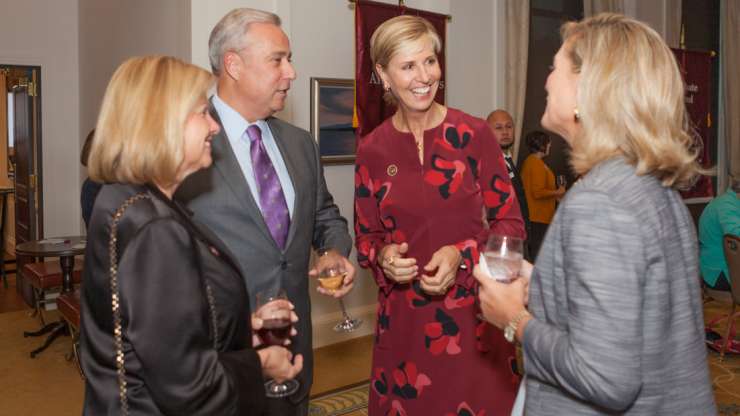
How is women’s giving behavior different from male donors? 5 insights about what makes women donate.

Board chairs expect the CDO to think both short-term and long-term and to set goals and create fundraising programs that appropriately balance short and long-term objectives. Board chairs view the CDO as one of the key leaders of their organizations…

Ron Schiller shares with Alexander Haas’s podcast how the transferable skills from his background in the arts set him up for success in fundraising – and how you can direct your career in fundraising to achieve your goals.

Multiple attempts have been made over the years to “manage change,” often with little effect. What if instead nonprofit professionals sought to lead through change?

Many “non-traditional” candidates from outside the nonprofit sector don’t get a chance to interview because the supposed risk in taking someone with only “related” experience is deemed too high. Here are some of those risks and perceived risks, together with suggestions on how to address or overcome them.

There are ways to prepare for the role of CDO, including serving on the board of a nonprofit organization in your community, finding mentors with the skills you need, or asking your own CDO to help you gain experience in areas that fall outside your current areas of responsibility. Excerpted from The Chief Development Officer: Beyond Fundraising, published by Rowman & Littlefield, 2013

Managing up—the ability to influence the people to whom fundraisers report—is a big factor “that differentiates people who are able to advance in their careers and those who are not.”

Seasoned nonprofit leaders offer their thoughts on how to get ahead professionally.