
There is no perfect professional pathway. You will make mistakes along the way. But these tips offer guidance for young professionals to smooth their path to creating a more satisfying professional career.
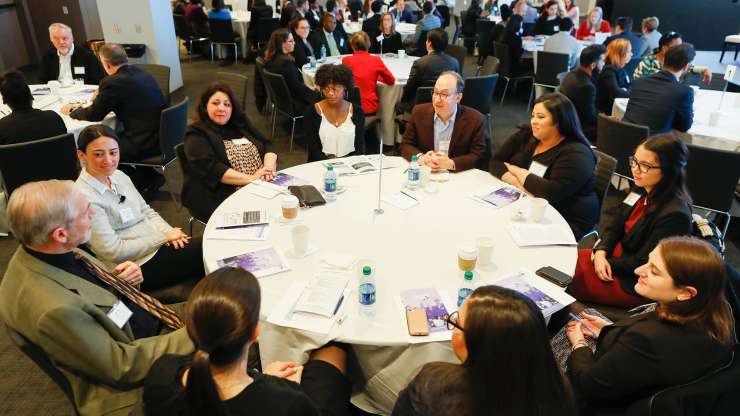

There is no perfect professional pathway. You will make mistakes along the way. But these tips offer guidance for young professionals to smooth their path to creating a more satisfying professional career.

In your work as a fundraiser, you may use the term “donor life cycle.” This model charts the path of a donor through several sequential phases of engagement and giving to causes they care about: first gift, occasional gifts, consistent annual gifts, major or stretch gifts, leadership role and accompanying giving, and finally, a planned gift. But because of their personal life stages, women’s “donor life cycles” are often not as linear as the simple model would suggest.

Candidates over 50 years old are experiencing a headwind when trying to secure their next role in the nonprofit sector. There are too many incidents of strong candidates who bring a wealth of experience and the ability to raise the bar of performance but who do not get hired. Is it possible to improve the hiring odds for these qualified candidates? And does this fall to the hiring organization, or are older candidates actually doing the best job they can to be viewed in the most positive way possible? This Coach’s Corner offers insights from both perspectives – hiring manager and candidate – and 8 recommendations about how candidates can better position themselves to land their next position.
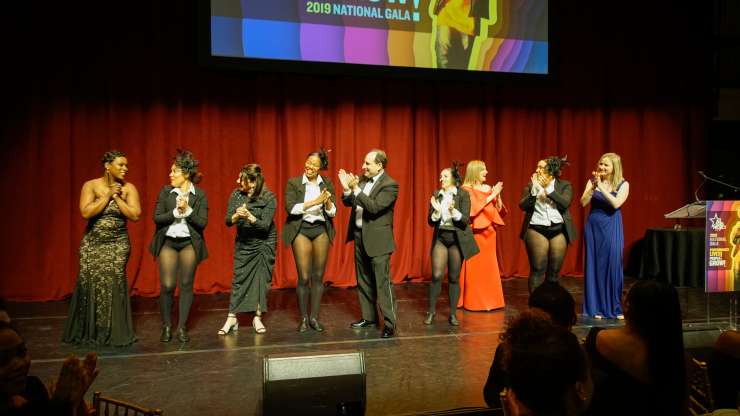
Our profession talks a lot about creating a “culture of philanthropy,” usually disguised as part of a conversation about how certain groups are not giving to expectations. Whatever your circumstances, there is a way for these groups to build a stronger culture of philanthropy. The first step is to recognize that it’s not specifically about giving, but about setting the conditions for giving.

Women want to be engaged before they are asked for a gift. Although we cannot lead with an ask, the conversation about providing support when the time is right should not be ignored. There is a risk in focusing exclusively on engagement and never making the leap to an explicit ask for support.
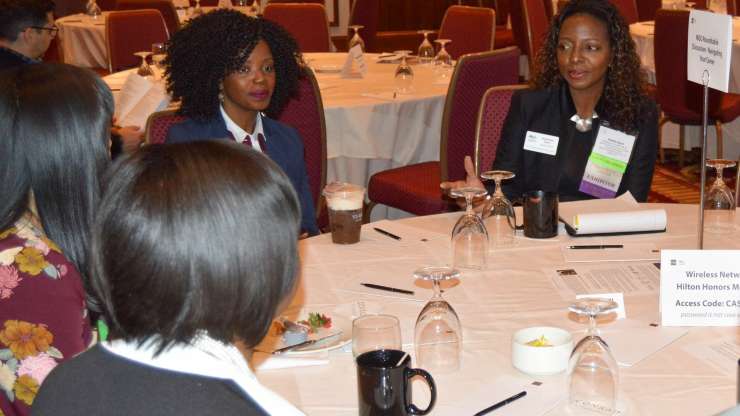
We are seeing fewer Americans give because we are applying the same approaches we’ve used since the 1960s to today’s very diverse donors. Our fundraising may be too pale, male, and stale. It is time to look in the mirror at our fundraising practices and see what needs to change.

Seldom does promotion come with a corresponding investment in management training. You do not need to look far to find studies pointing to how poor management is the top reason for staff turnover. After many years of managing people, few things have been more effective in making me a better manager than writing out my management philosophy. Why does having a management philosophy work?

All donors need logical information about an organization to make giving decisions. Women need to hear facts and statistics in order to trust that their gift is in good hands. But adding communication that evokes empathy will deepen your conversations with women, leading to stronger relationships and an increased likelihood of giving.

Do your President and Deans know how many days a year you have to fundraise? I bet they will be surprised by the answer. Recently a senior university advancement leader wanted to know how best to educate the deans about how limited the fundraisers time was to actually do the work of raising money. So how many days in a year do you actually have to meet prospects and raise money?
After 25 years serving in higher ed advancement leadership, my life’s work is now focused on coaching nonprofit leaders, finding great talent for an organization, and partnering to solve a myriad of organizational issues. I am launching Coach’s Corner to complement this work, share what I am learning, and present strategic questions from leaders in the field and insights about how to address them.